
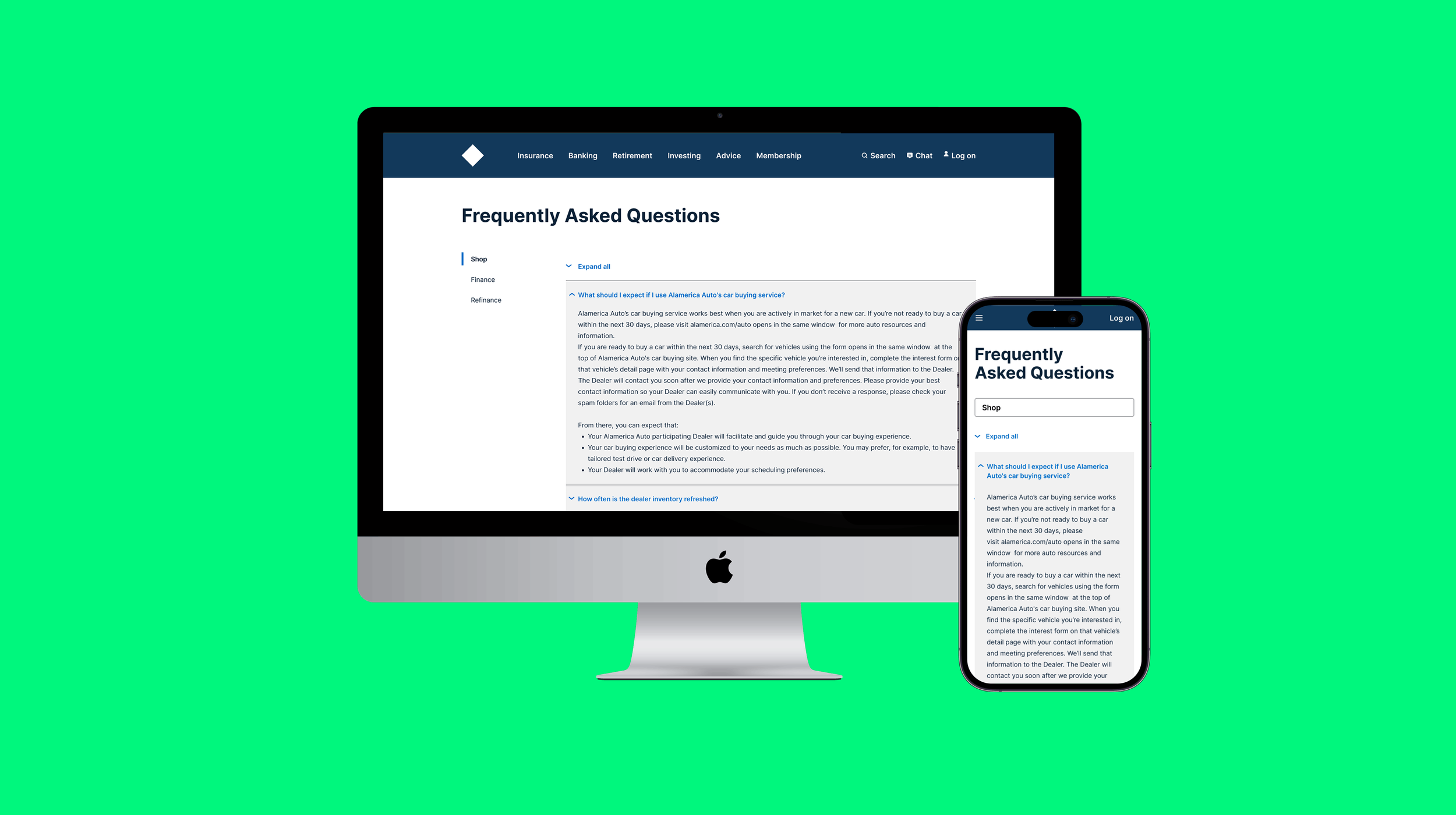
Auto Loan FAQ design
Improving loan completion through clearer guidance and reduced content overload.
UX Lead | 4 months | Cross‑functional team of 6
Context
Legal and compliance teams approved additional required disclosures for the Auto Loan Refinance page, but the information was difficult for members to find and understand. Dense text, unclear labeling, and accessibility issues increased confusion and support volume.
The business needed a clearer, more accessible way to present legally required information while improving loan completion.
Problem
Content Overload
Long blocks of compliance‑approved text made it difficult to find relevant information.
Unclear Information
Legal, technical, and loan requirements were mixed together without clear labeling.
Accessibility Challenges
NCUA standards required full‑length disclosures, but the layout made them hard to navigate.
The result: confusion, abandonment, and increased support burden.
Challenge
I had to present full legal disclosures without altering approved content, improve clarity and scannability, support accessibility requirements, and create a structure that could scale across future lending products.
CORE TENSION: maintain legal accuracy while making the experience usable.
Research & Discovery
Competitive analysis of major financial institutions highlighted common patterns for handling regulatory content, including accordion layouts and mobile‑first progressive disclosure.
User testing and support data showed members struggled to find required documents, next steps, and clear explanations within dense legal text.
Audience insights revealed that older military veterans and 80%+ mobile users needed clearer hierarchy, readable text, and simplified navigation.
Accessibility review identified issues with contrast, scannability, and keyboard/touch interactions.
Stakeholder constraints confirmed that disclosures had to remain visible, reframing the challenge as how to present them, not whether to show them.
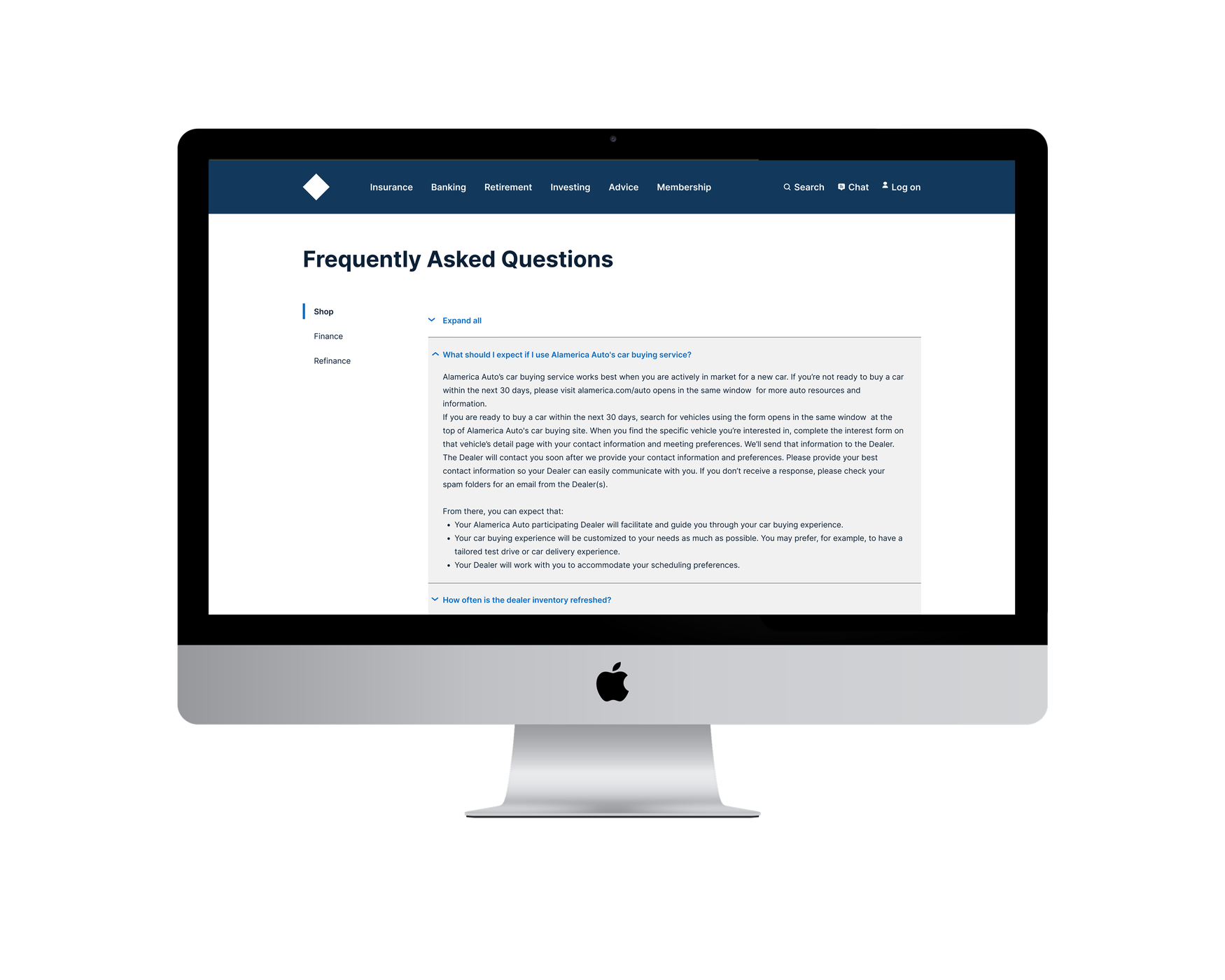
Desktop view of FAQ sectionSolution
A two‑part structure that met legal requirements while improving clarity and usability.
1. On‑Page FAQ Section
Accordion‑style FAQ embedded directly on the refinance page
Quick access to legal, compliance, and technical disclosures
Reduced scrolling and content overload
2. Comprehensive Auto Loan FAQ Page
Clear information architecture separating legal, technical, and loan content
Search and support functionality
Responsive, accessible layout with progressive disclosure
Clearer guidance for required documents
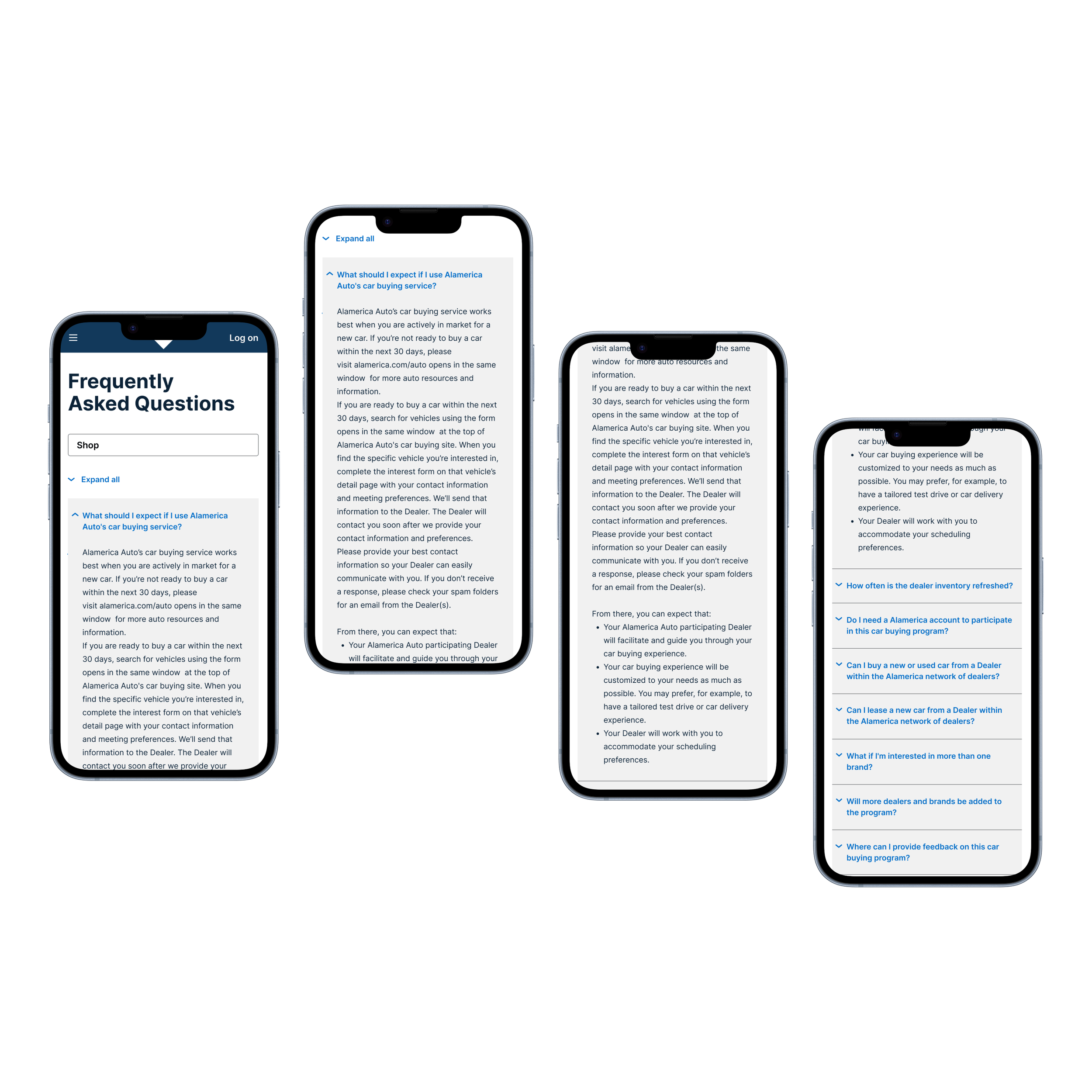
Mobile views of FAQ sectionResults
Improved readability and scannability
Increased accessibility for older users and mobile devices
Reduced confusion around required documents
Scalable FAQ template adopted across three other lending products
Met compliance and accessibility requirements without sacrificing usability